
Guizhou deputy submits motion for intangible cultural heritage revival


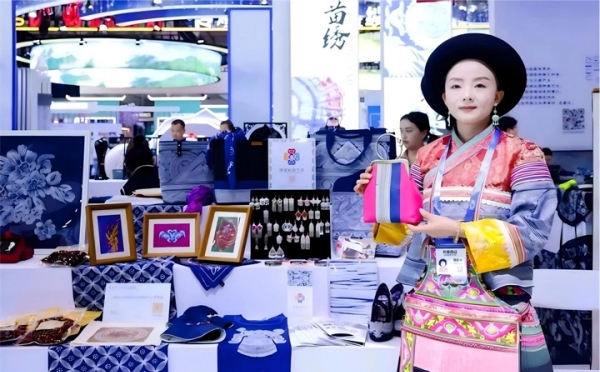
Xiong strives to integrate intangible cultural heritage with tourism and e-commerce. [Photo/ddcpc website]
Xiong Zhaomei, deputy to Guizhou Provincial People's Congress and inheritor of Guizhou provincial intangible cultural heritage (ICH), said on Jan 27 that for this year's provincial two sessions, she submitted a motion called the "rural ICH youth revitalization plan", aiming to boost Guizhou's tourism industry.
The plan aims to nurture a new generation of craftsmen who grasp traditional skills, business management, and innovation. This will be achieved through policy support, skills training, and market linkage, thereby activating the internal driving force for rural industry, talent, and cultural revitalization, she said.
For years, Xiong has been exploring the integration of ICH inheritance and rural vitalization. In 2012, she founded the Zhaomei Batik Handicraft Workshop, reviving over 20 endangered classic patterns and promoting batik's transition from static preservation to living inheritance. In 2025, she visited more than 200 households, listening to people's voices and noting their feedback and constructive suggestions.
During her field visits, Xiong discovered that while Guizhou's intangible cultural heritage is concentrated in rural areas, it faces a transmission crisis as traditional skills disappear with outward migration.
Meanwhile, integrating ICH with tourism and e-commerce shows tremendous potential. Therefore, she submitted the motion, which centers on passing on culture, empowering rural communities, and improving livelihoods.
Xiong suggested strengthening policy support, establishing an ICH youth entrepreneurship fund, creating clusters of ICH workshops, developing ICH-themed tourism routes, and advancing the standardization and branding development of ICH products.
She said ICH should transcend its role as static exhibits, instead becoming a cultural resource that can be experienced, consumed, and utilized as a means to achieve prosperity.
 Overview
 Guiyang
 Guian New Area
 Liupanshui
 Anshun
 Qianxinan
 Qiandongnan
 Qiannan
 Zunyi
Zunyi Tongren
 Bijie
Bijie China (Guizhou) Intl Alcoholic Beverages Expo
 Big Data Expo 2025
 Singer Zhou Shen: Finding myself, reaching the world


All rights Reserved. 京ICP备13028878号-8